
Liberal Enlightenment thinkers pave the way for totalitarianism

Is it true that John Locke, an Englishman, introduced the principle of civil liberty to the Western world through classical liberalism? Absolutely not! Through his liberal philosophy, Locke distorted the understanding of true civil liberty, paving the way for its abolition with the emergence of Jean-Jacques Rousseau’s romantic democracy. Locke was a deist who believed that God created the world but no longer influences it. This conception of God was common during the 17th- and 18th-century Enlightenment. It is important to note Locke’s adherence to deism because he wrote extensively about “God,” including a book on Christianity that is actually a deist propaganda treatise. Nevertheless, he was as godless as nearly anyone else.
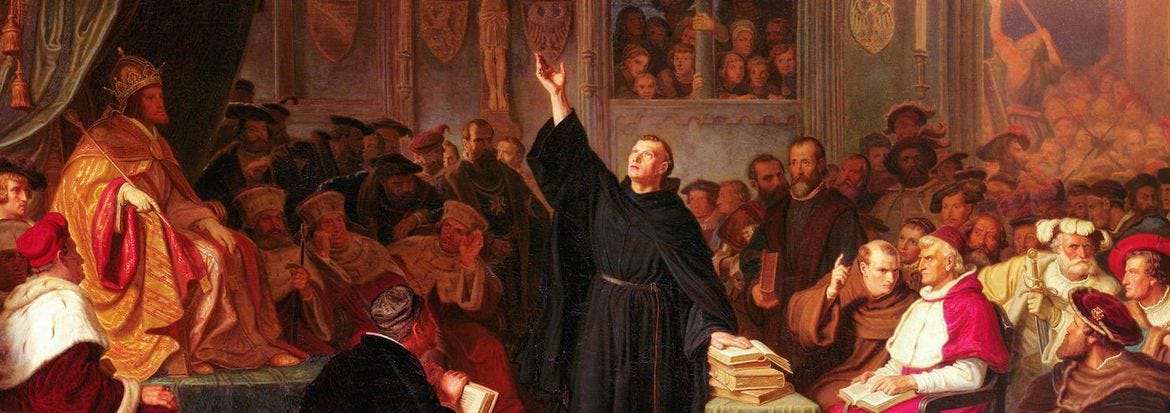
The idea of a liberal social order was not invented in the 17th and 18th centuries. It did not first emerge in the philosophical systems of empiricists and skeptics, such as John Locke and David Hume. Its roots were much deeper in Europe’s intellectual history than the revolutionary ringleaders of the late 18th century dared to admit. The European doctrine of liberty had its roots in Christianity, not the classical philosophies of Greece and Rome. Contrary to the beliefs of proponents of natural law and the Enlightenment, it did not wither away in the barren wasteland of the Middle Ages, but rather possessed an extraordinary vitality. In fact, the fundamental elements of English constitutionalism and common law were deeply embedded in feudal structures. Theological upheavals of the Reformation nourished these seeds of freedom anew. John Calvin and Martin Luther provided this doctrine with a theological foundation that has enabled it to survive the relentless attacks of humanists for the past five centuries, emerging more or less intact. The Reformation faith offers society the greatest opportunities for development. This social order guarantees a balanced relationship between freedom and order. Of utmost importance here is the biblical doctrine of the Trinity. Any attempt to understand how people should live together in a state according to God’s will must consider this doctrine as the focal point. When people no longer feel accountable to God, and when the focus on humanity alone has prevailed in humanist philosophy, totalitarian domination and the oppression and exploitation of the vast majority for the benefit of an extremely small minority inevitably take hold.
Although the biblical concept of freedom had proven its worth for several centuries following the Reformation, it was not strong enough to stop the erosion caused by relentless humanist attacks in the modern era, influenced by Enlightenment philosophy. Throughout the 19th century, the consequences of secular resistance to the biblical doctrine of freedom came to the forefront of public attention.
The publication of “Musings of the Court Jester” relies on donations. If you have found spiritual orientation in this text, we would appreciate a one-time or recurring donation to support our ministry. May the Lord reward you!