
President transforms democracy into a dictatorship

From the early to mid-18th century, Deism had a conservative influence on politics in colonial America that failed to inspire many colonists. In the last quarter of the century, however, deism adopted a more radical stance toward political realities, attracting greater attention. After 1789, the first year of the French Revolution, deism spread rapidly among the American population, prompting Christians to view it as serious competition to their faith for a time.
The spread of French culture in the American colonies had prepared the ground on which freethinking could take root. From 1763 to 1789, there was essentially a revolt against external and arbitrary influence. In the political sphere, the American Revolution (1775-1783) was, in a sense, deism’s response to the imperial government of Great Britain abusing its power to prevent the economic growth of the colonies. The political philosophy of that era emphasized the preservation of natural rights, as propagated by Enlightenment philosophy. According to this conception, the state assumed the role of a guardian whose primary duty was to protect the rights of citizens. The political climate of that era aligned with the deist religious philosophy, which emphasized liberation from the tyrannical rule of an arbitrary God. Deists deliberately portrayed God in a derogatory light. Although the Supreme Being created and set in motion a cosmic machine, He did not concern Himself with it thereafter. It moved perpetually in accordance with the immutable and regular laws of nature, without any external power influencing it.
Were Jefferson, Franklin, Paine, and the other American revolutionaries aware that their reflections on the political conditions in the colonies were guided by John Locke’s liberal ideas? Did they realize that they had embraced rationalist deism? Did they understand how far they had strayed from a Christian worldview by embracing Enlightenment liberalism? Were they aware that they were fundamentally rejecting the political system that had traditionally been used in New England and most other colonies for centuries? These are undoubtedly rhetorical questions. The revolutionary colonists were fully aware that with every step toward independence, they were making a radical break with a Christian-based past. They consistently carried out their intention to establish a new social order, even if it meant accepting the deaths of many soldiers.
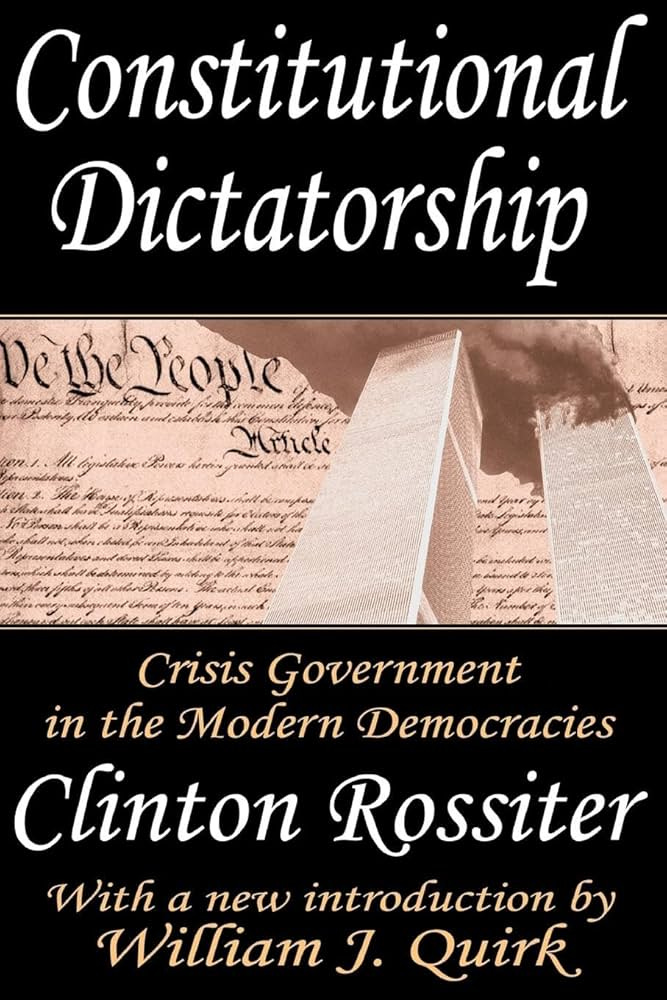
However, they failed to consider the conceptual contradiction in Locke’s philosophy, a mistake that would have fatal consequences over time. Locke’s doctrine of human rights provided an inadequate foundation for restraining the ever-expanding power of the American president. Ultimately, human rights would lose their validity through the very weapons that had been forged to defend them. Although the colonists escaped the direct rule of the English Parliament after the Revolutionary War, the American patriots introduced a new political system that, in the long run, would lead to the totalitarianism of the dictator Abraham Lincoln in less than a hundred years. The catastrophic consequences of Lincoln’s rule make the supposed tyranny of Great Britain seem like paradise. Even historians who view Lincoln as admirable do not shy away from calling him a dictator. In his book Constitutional Dictatorship: Crisis Government in the Modern Democracies, Clinton I. Rossiter, a political scientist who taught at Cornell University, devoted an entire chapter to Lincoln. Rossiter called Lincoln a “great dictator” (p. 224) and a “true democrat” (p. 224)—two terms that do not normally appear side by side when referring to the same person. These designations make it clear to what extent American democracy had already transformed into a totalitarian regime during the first Republican presidency. Rossiter leaves no doubt about this conclusion: “This amazing disregard for the words of the Constitution, though considered by many as unavoidable, was considered by nobody as legal.” (Ibid., 226)
The publication of “Musings of the Court Jester” relies on donations. If you have found spiritual orientation in this text, we would appreciate a one-time or recurring donation to support our ministry. May the Lord reward you!