
Psychological Warfare with LSD

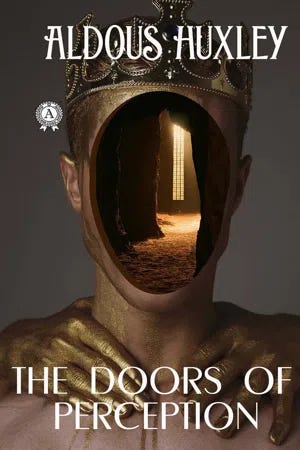
In 1953, Dr. Humphry Osmond provided British novelist Aldous Huxley with mescaline for personal use. The following year, Huxley published The Doors of Perception, the first public manifesto of the psychedelic drug culture. In this work, Huxley claimed that hallucinogenic drugs “expand consciousness.” Huxley established an LSD-mescaline project in California, recruiting individuals originally drawn into cult circles he co-founded during his time there from 1937 to 1945. The two most prominent figures were Alan Watt and Dr. Gregory Bateson, the former husband of the renowned anthropologist Margaret Mead. Watts became the self-proclaimed “guru” of a nationwide Zen Buddhist cult that formed around his highly acclaimed books. Bateson, an anthropologist with the Office of Strategic Services (OSS), an American intelligence organization that was later replaced by the CIA, became director of a hallucinogenic drug research facility at the Palo Alto Veterans Administration Hospital. Under Bateson’s patronage, the “core members” of the LSD sect—the hippies—were “programmed.”
In the fall of 1960, Huxley was appointed a visiting professor at the Massachusetts Institute of Technology in Boston. During his stay, he established a circle at Harvard University that existed in parallel to his LSD team on the West Coast. This group included Huxley, Osmond, and Alan Watts, who had moved from California, as well as Timothy Leary and Richard Alpert. The ostensible topic of the Harvard seminar was “Religion and Its Significance in the Modern Age.” In reality, however, the seminar served as a planning session for the “acid rock” counterculture, characterized by distorted guitars, long jams, feedback, and trance-like rhythms.
LSD (lysergic acid diethylamide) was developed in 1943 by Albert Hofmann, a chemist at Sandoz AG, a Swiss pharmaceutical company owned by Siegmund G. Warburg. Although it has never been clearly established who commissioned the LSD research, it can be assumed that the British Secret Service and its affiliate, the U.S. Office of Strategic Services (OSS), were directly involved. Throughout the early Sandoz research phase, Allen W. Dulles was the OSS station chief in Bern, Switzerland. One of his assistants was James Warburg, who was related to Siegmund G. Warburg.
In the early 1960s, Huxley made contact with the president of Sandoz. The company produced large quantities of LSD and psilocybin, another synthetic hallucinogenic drug, on behalf of the CIA for the official chemical weapons experiment MK-ULTRA. Dulles was the CIA director when the agency launched its covert LSD experimentation program, MK-ULTRA, in 1952. Published government documents confirm that Dulles ordered Sandoz to produce over 100 million doses of LSD in his capacity as CIA director. Nearly all of these ended up on the streets of the U.S. in the late 1960s. Around the same time, Timothy Leary began purchasing large quantities of LSD from Sandoz as well. Based on discussions from the Harvard seminar, Leary compiled the book The Psychedelic Experience, based on the ancient Tibetan book The Book of the Dead. The book popularized the term “psychedelic expansion of consciousness,” coined by Osmond.
By 1963, Huxley had assembled his inner circle of “initiates” for his Isis cult, which centered on drug use. Leary, Osmond, Watts, Kesey, and Alpert—all of whom were highly regarded proponents of early LSD-fueled hippie culture—were part of this circle. By 1967, with the “Flower People” cult in San Francisco’s Haight-Ashbury district and the rise of the anti-war movement, the United States was ready for the flood of LSD, hashish, and marijuana that swept through American universities in the late 1960s.
Huxley, who worked for British intelligence, had two reasons for manipulating the younger generation of the American public during the Vietnam War. First, he wanted to promote a confrontation in Southeast Asia in the form of a “limited war” between the United States and the Soviet Union via their North Vietnamese “proxies.” This would reignite the Cold War and undermine the influence of both powers in the region. The second and equally important reason was to demoralize the American people to such an extent that their sense of national pride and confidence in the Republic’s future progress would be shattered forever.
Without the Vietnam War and the British intelligence service’s “anti-war” movement, the ISIS cult would have remained no larger than the Beatnik cult of the 1950s, which emerged from early Huxley projects in California. The war created a climate of moral despair that made the educated youth of America—the first generation of the 20th century to grow up without economic depressions or world wars—vulnerable to drugs.
The publication of “Musings of the Court Jester” relies on donations. If you have found spiritual orientation in this text, we would appreciate a one-time or recurring donation to support our ministry. May the Lord reward you!